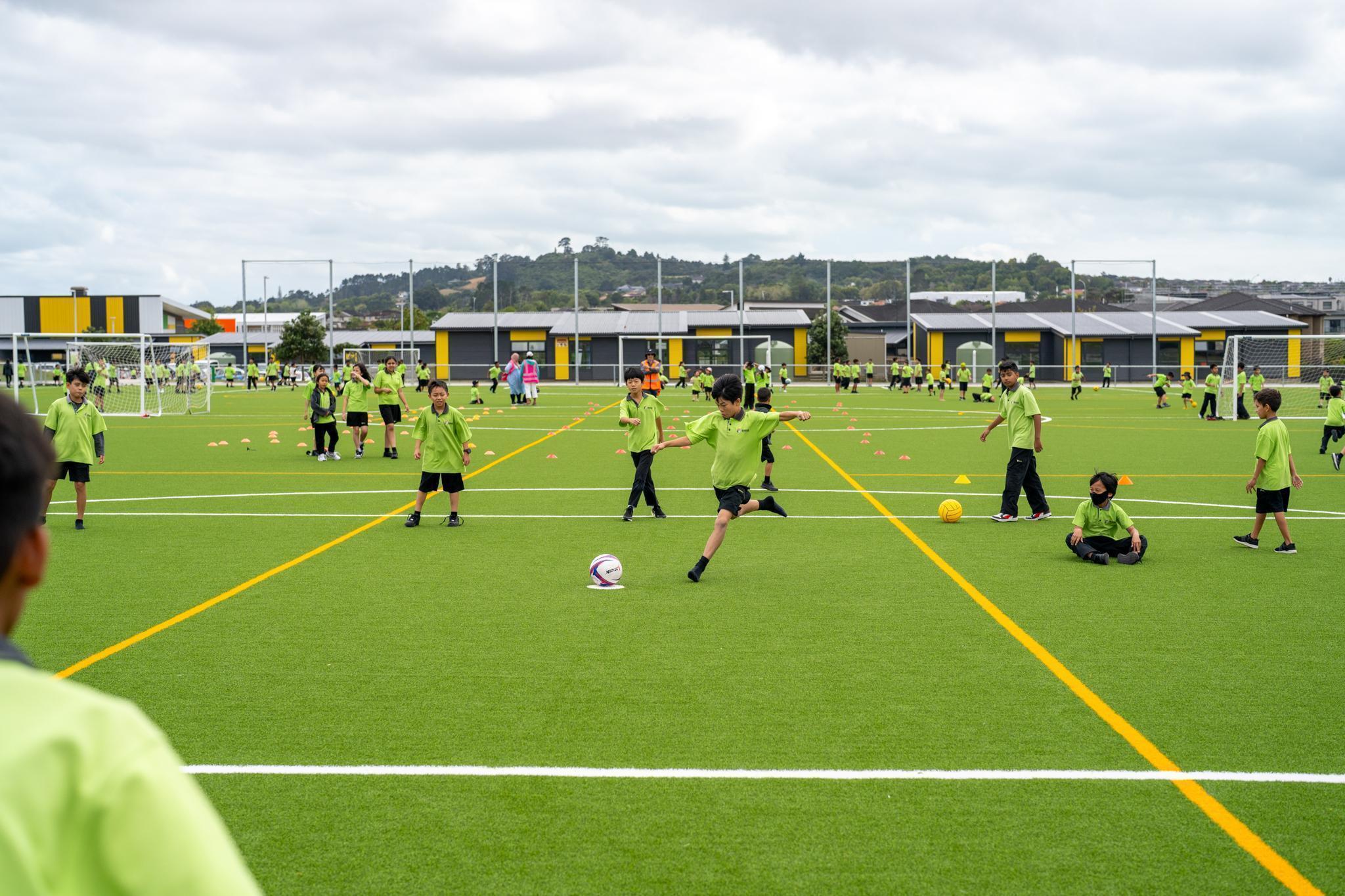
Equity of Play Starts Close to Home
How a new community sports field in Auckland is creating more opportunities for children and families to play, move and connect. Access to sport and play is not equal everywhere. For many children, the opportunities to be active are shaped by something as simple as where they live. The availability of outdoor space, nearby sports facilities and opportunities to join organised sport can make a significant difference.
Not every child has a backyard. Not every family has the opportunity to join a sports club. Yet the need to play, move and spend time outdoors is universal.At Almerston Primary School in Auckland, New Zealand, that understanding helped shape a project designed to benefit not only students, but the wider community.
A school field with a wider purpose
Like many schools, Almerston Primary School faced the challenge of making the most of its available outdoor space. Its existing natural grass field was frequently unavailable during Auckland's wet winter months, limiting opportunities for students to play and participate in sport.
But the ambition went beyond improving the school's facilities. The school recognised that many families in the surrounding community had limited access to outdoor recreational space. For children without a backyard, a nearby playing field can be an important part of everyday life. The objective was therefore to create a sports field that could accommodate regular school activities while also providing a place for the community to enjoy outside school hours.
More opportunities to play, throughout the year
Installed by TigerTurf, part of TenCate, the new synthetic turf field provides a versatile playing surface designed for regular, intensive use. Football was an important consideration in the design, but the field also needed to accommodate a broader range of sporting and recreational activities. The system combines a synthetic turf surface without loose performance infill with an underlying drainage layer incorporating recycled rubber and plastic materials.
Together, these elements support a playing environment designed for year round use, with fewer limitations associated with wet weather and the maintenance requirements of natural grass. For the school, that means greater availability for physical education, organised sport and everyday play. For the surrounding community, it means something equally important: access to a local space where children and families can be active.
When school facilities become community spaces
One of the most meaningful decisions was to make the new field available to the wider community. Rather than limiting its use to school activities, Almerston Primary School opened the facility beyond school hours, extending its value to families living nearby.
This approach reflects a wider question facing communities around the world: how can existing spaces create more opportunities for people to participate in sport and play? As urban areas become denser, access to outdoor space cannot always be taken for granted. Schools, parks and shared recreational facilities can play an increasingly important role in making physical activity part of everyday life.
A school sports field may seem like a relatively small intervention. But when that field becomes a shared community resource, its value extends well beyond the school day.
The value of a playing surface goes beyond performance
Sports surfaces are often evaluated in terms of performance, durability and maintenance. These remain essential considerations, particularly for facilities used intensively throughout the year. But availability matters too. A field that can accommodate more playing hours creates more opportunities for children to develop skills, build friendships and enjoy being active. Opening that same field to the community extends those opportunities even further.
The project at Almerston Primary School demonstrates how the right combination of surface technology, thoughtful facility planning and community access can make a practical difference. For TenCate, enabling sport and play is about more than the performance of the surface itself. It is also about the opportunities that surface makes possible. Because access to play shouldn't depend on whether a child has a backyard or belongs to a sports club.