A small town, an old pitch, and a tender shaped by how materials are chosen
In Krempe, one of the smallest cities in Schleswig-Holstein, football is part of daily life. Almost half the town is connected to TuS Krempe. Twelve teams rely on a single pitch that dates back to the 1980s. That pitch had become unreliable. Heavy rainfall regularly made it unusable, especially in autumn and winter. Training sessions were cancelled. Planning became guesswork. After five months of construction, that changed. Weitzel Sportstättenbau installed a new synthetic surface at TuS Krempe in March 2026. The system, GreenFields Slide Max ST, is developed following the ONE-DNA™ design principle, where yarn, backing and coating are made from the same polymer.
Reliable use, week after week
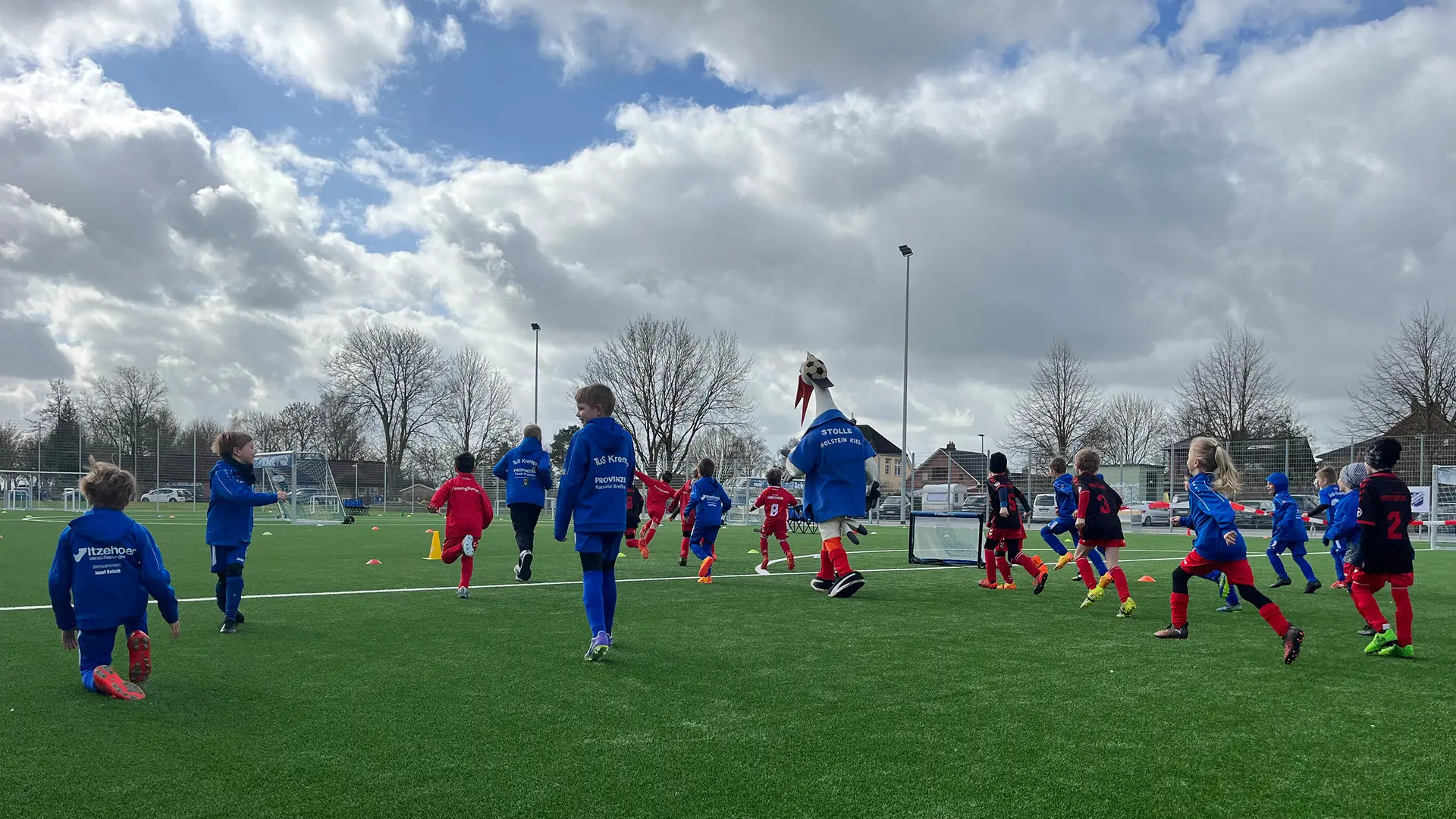
The project was made possible through a combination of local and public funding. The city of Krempe, the local school association and the Städtebauförderung programme each played a role, with contributions from federal and state level.For a town of 2,500 residents, that kind of alignment is what makes a project like this feasible. For the club, the impact is immediate. Twelve teams now train on a surface that stays available throughout the year. Weather no longer dictates whether sessions go ahead. The field does what it is expected to do. Eighty children were on the pitch during the opening tournament. That says enough.
How the tender was decided
The project was awarded through a public tender with a defined evaluation matrix. Performance and availability formed the foundation. But the specification also included criteria that favoured systems with a clear and considered material composition. Based on that evaluation, the ONE-DNA™ system scored highest. That outcome led directly to the contract award. The use of a single polymer throughout the system was part of that assessment. Not as a standalone claim, but as a characteristic that fits within a broader way of looking at materials over time.
A shift in how projects are assessed
What stands out is not just the result, but the structure behind it. Public tenders are starting to reflect a wider set of considerations. Not only how a field performs when installed, but how it behaves over years of use, and how its materials are defined from the start. Those elements are now being assessed together, within the same decision framework. The pitch in Krempe is a local project. It will not attract much attention outside the region. But it shows how decisions are evolving. Quietly, through specifications, evaluation matrices, and the choices that follow from them.
Photo: Sam-Luke Ferrier