Rethinking Space for Sport & Play
Across the world, cities are growing while space becomes increasingly scarce. Housing, infrastructure, and commercial development compete for the same square meters that once accommodated sports fields and recreational areas.
At the same time, the need for places to move has never been greater. Urban populations are expanding, physical inactivity is rising, and communities are searching for ways to make sport and movement more accessible.
The question is no longer simply how much space is available, but how that space is used.
Beyond the Traditional Sports Field
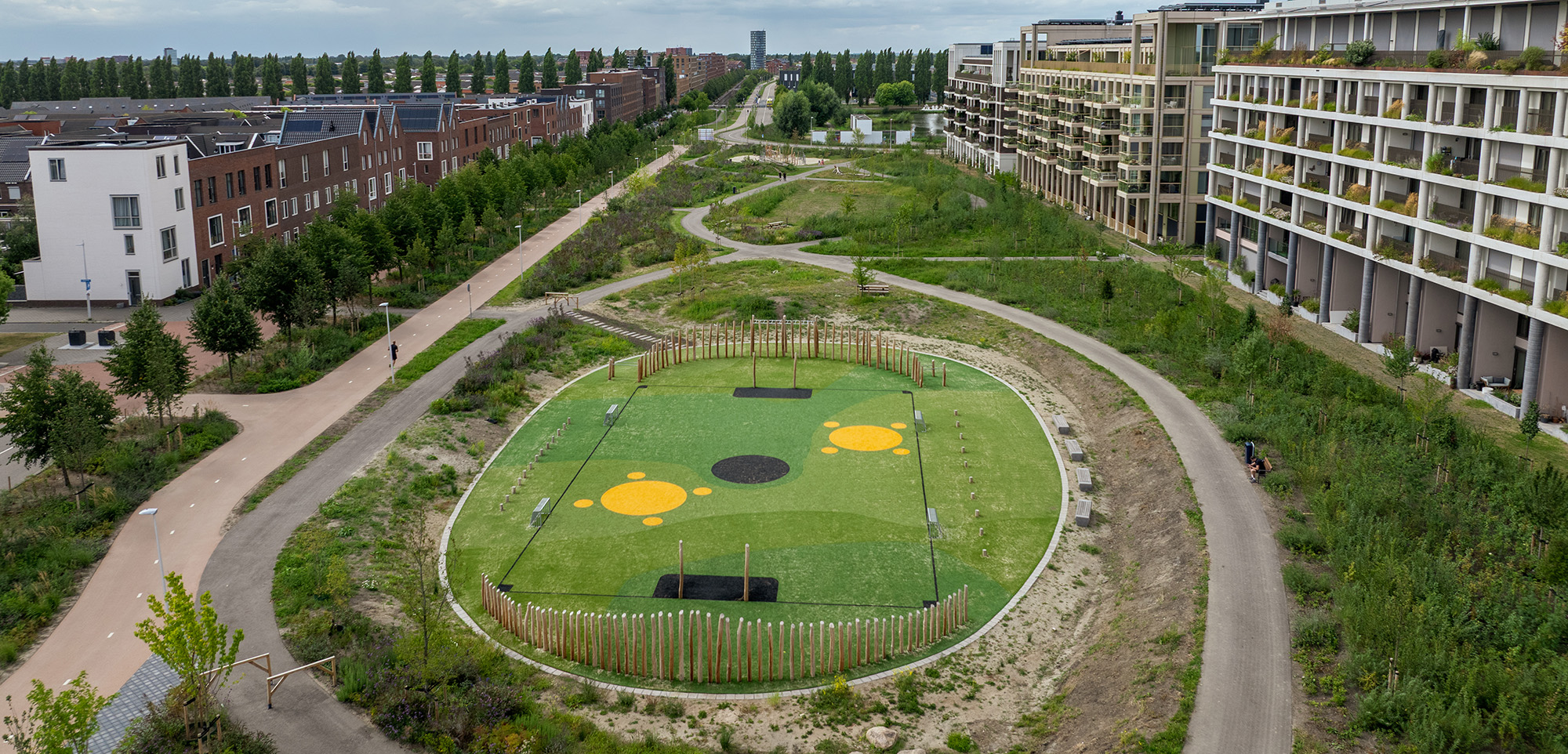
Sport is often associated with large facilities such as full-size football pitches or sports complexes. In dense urban environments, however, these traditional formats are becoming harder to accommodate. A different perspective is needed. Smaller courts, neighborhood pitches, and multi-use play areas can provide accessible places to move within the urban fabric itself.
Spaces integrated into schoolyards, rooftops, courtyards, or overlooked corners of the city often become the places where daily activity actually happens. When designed well, these spaces can have a significant impact on community health and social interaction.
Designing Spaces That Last
Urban play environments must often withstand intensive use. Surfaces need to remain safe, playable, and reliable under frequent activity and varying weather conditions. This shifts the focus from simply creating space to designing spaces that perform over time.
Durability, maintenance requirements, and material behavior become as important as the initial installation. Systems that require frequent maintenance or constant refilling quickly become difficult to manage in public environments. At the same time, materials that cannot be recovered at the end of their life create additional challenges for cities.
Circular Thinking in Urban Play
As urban play spaces become smaller and more intensively used, sustainability becomes a design requirement rather than an afterthought. At TenCate, research and development focus on surfaces designed for durability, minimal maintenance, and material recovery. Systems such as Pure PT and ONE-DNA™ are developed with circular principles in mind, where lifespan, maintenance, and recyclability are considered from the start.
This approach enables cities to create sports and play environments that remain accessible, resilient, and responsible over time.
Smarter Cities, More Opportunities to Move
The real challenge for cities is not necessarily finding more space, but using existing space more intelligently. Urban environments already contain many small areas where movement naturally takes place. The opportunity lies in designing infrastructure that supports this behavior.
When cities begin to treat space for movement as essential infrastructure, alongside mobility, green space, and water systems, they create environments that encourage healthier and more connected communities. Cities need to become smarter to offer more space to move.