Why Study Player-Surface Interaction.
6 June | Nijverdal
Every step, sprint and turn is influenced by the surface beneath the athlete. Understanding this interaction is essential to designing systems that support performance and reduce injury risk especially under high-intensity play.
Capturing Real Movement
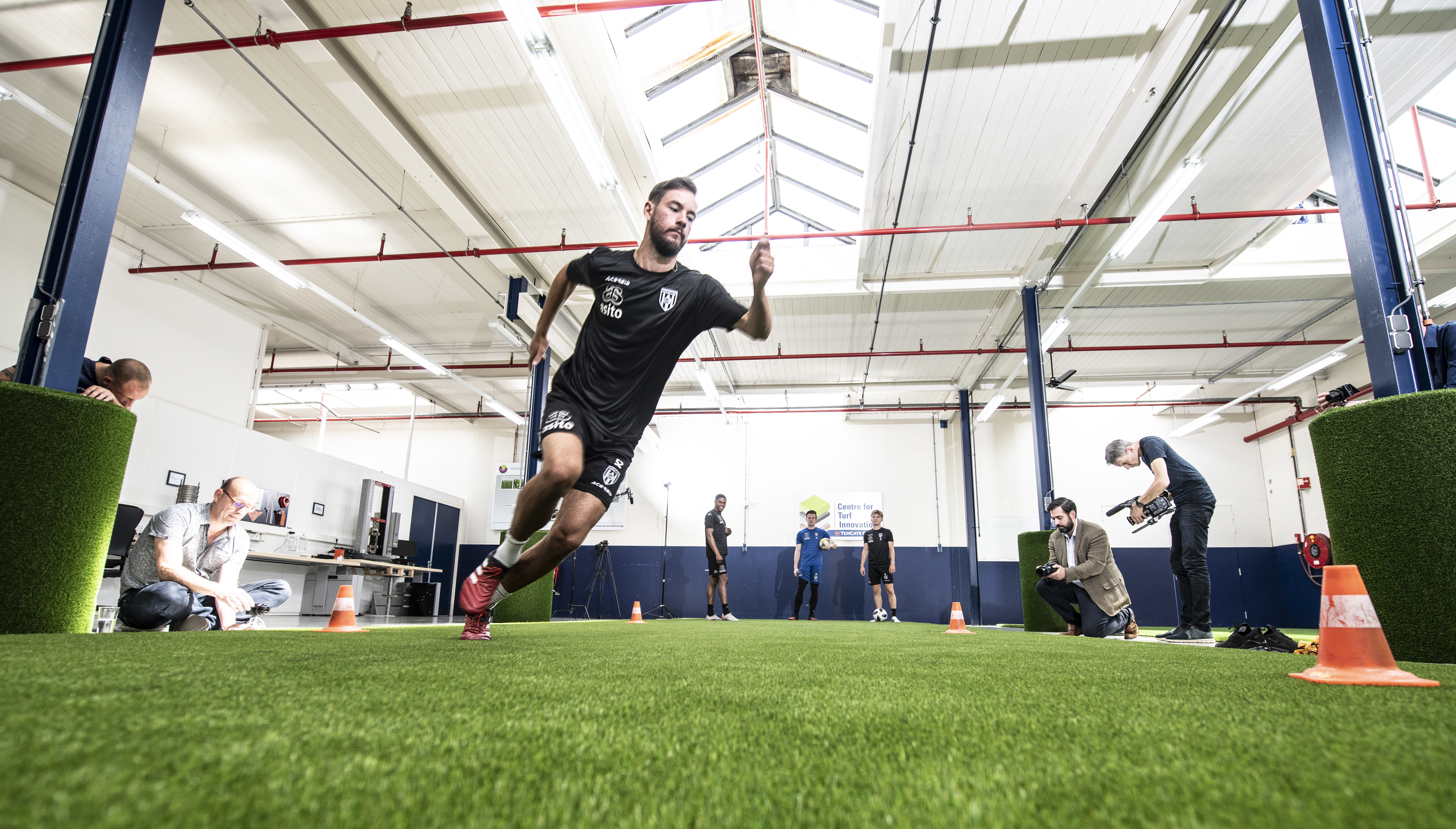
Athlete motion is fast, complex and constantly changing. Measuring how a surface responds requires precision tools: wearable sensors, high-speed cameras and on-field testing under real conditions.
“It’s not about how a surface looks or performs in the lab. It’s about how it responds to real athletes in motion.” — Colin Young, Director of R&D, TenCate
Athletes are tracked during dynamic movements to study how different turf systems affect joint load, power transfer and movement patterns. This data helps answer practical design questions: What happens when we change a fiber? How does shock absorption shift with different layers? Which system supports better turning or acceleration?
What We Measure
- Acceleration and maximum speed
- Turning ability and grip control
- Joint angles, from ankle to hip
- Gait adaptation and force transmission
This information reveals how the surface influences biomechanics under pressure.
From Insight to Innovation
The data is used to fine-tune components, like yarns, base layers and system stiffness to better replicate the feel and function of natural grass. Each change is validated through repeated testing with elite athletes.
Why It Matters
Grip, energy return and safe movement are not abstract goals. They are measurable, system-specific outcomes. In high-performance environments, even small improvements in surface behavior can make a difference in results and in long-term athlete health. Understanding the athlete starts with understanding the surface.